
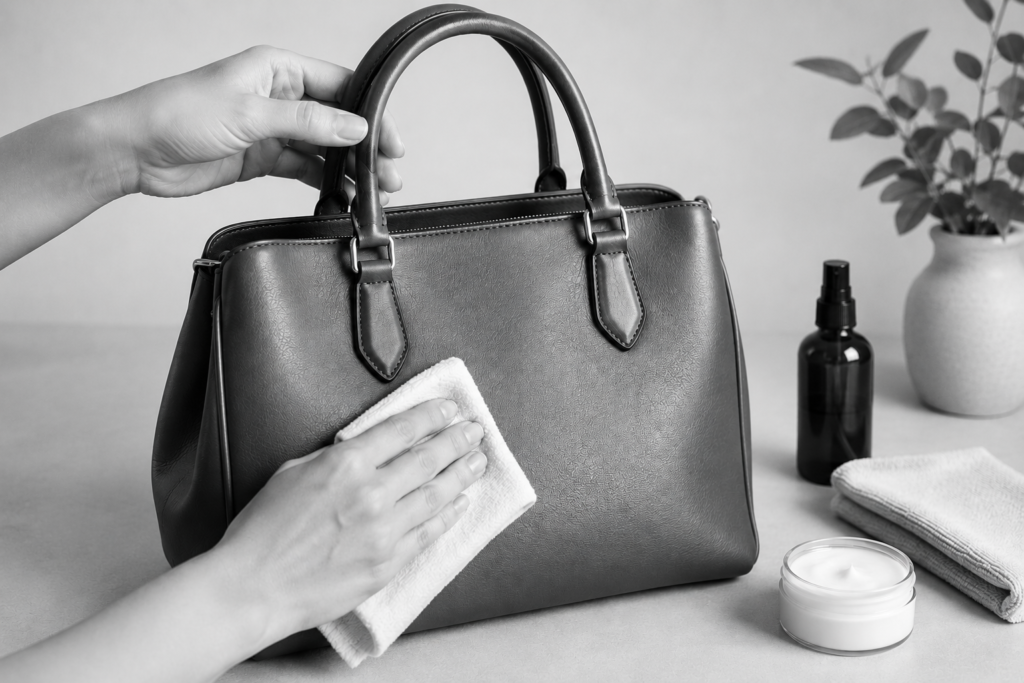
Quick answer: To clean a leather bag at home, empty it, wipe it with a soft dry cloth, then spot-clean marks with a barely-damp cloth and a little mild leather cleaner. Let it air-dry away from sunlight and finish with a leather conditioner. This handles everyday dirt and light surface marks. Deep stains, ink, mould, colour fading, or a torn strap need professional handbag cleaning or repair.
Your leather bag picks up hand oils, dust, and the odd spill every single time you carry it. Left alone, that build-up dulls the finish and ages the leather faster. The good news? Most light cleaning is something you can do safely at home in under 20 minutes.
In this guide you will learn the exact at-home cleaning steps, a clear DIY vs professional comparison, how to tackle ink and oil stains, and the warning signs that mean it is time to call in a repair expert. The advice here comes from the workshop floor at The Leather Laundry, where our artisans clean and restore designer bags every day.
Key Takeaways
- DIY is for upkeep: dust, light marks, and conditioning are safe to do at home.
- Pros are for risk: ink, mould, deep stains, colour loss, and structural damage need experts.
- Always patch-test first on a hidden spot before any cleaner touches the leather.
- Never soak leather or dry it with heat both cause cracking and stains.
Luxury bags (LV, Gucci, etc.) are best left to professional cleaning and repair to protect their value.
How do you clean a leather bag at home, step by step?
Clean a leather bag at home in five steps: empty it, dust the surface, spot-clean with a damp cloth and mild cleaner, let it air-dry, then condition. The whole routine takes 15–20 minutes and suits smooth (full-grain or coated) leather. Suede and nubuck need a different, dry-brush method.
What you need
- A soft, lint-free microfiber cloth (two is better)
- A mild, pH-balanced leather cleaner (avoid soap, baby wipes with alcohol, and household sprays)
- Lukewarm water
- A quality leather conditioner to restore moisture afterwards
- A soft-bristle brush (only for suede or seams)
The 5 steps
Empty and shake out. Remove everything and gently shake loose crumbs and dust from the lining.
Dust the surface. Wipe the whole bag with a dry microfiber cloth to lift loose dirt before it scratches.
Patch-test, then spot-clean. Test your cleaner on a hidden corner. If the colour is fine, dampen a cloth lightly, add a little cleaner, and wipe in small circles. Focus on handles and the base — they wear fastest.
Wipe and air-dry. Remove residue with a clean, just-damp cloth. Let the bag dry naturally, away from sunlight, heaters, and hair dryers.
Condition. Once fully dry, rub in a thin layer of leather conditioner to keep the leather supple and prevent cracks.
Workshop tip: The single most common mistake we see is over-wetting. Leather is porous too much water leaves rings and can lift the dye. Damp, never wet. When unsure how often to do this, read our guide on how often you should clean your leather bag.
DIY vs professional leather bag cleaning: which should you choose?
Choose DIY for routine upkeep dusting, light marks, and conditioning. Choose professional handbag cleaning when the bag is expensive, heavily stained, discoloured, mouldy, or structurally damaged. DIY protects your time and money on small jobs; a pro protects the bag itself on high-risk ones.
| Factor | DIY at Home | Professional Service |
| Best for | Dust, light marks, routine conditioning | Deep stains, ink, mould, fading, repairs |
| Cost | Low basic supplies only | Higher, but far less than replacing the bag |
| Risk to bag | Higher if you use the wrong product or too much water | Low patch-tested, material-specific methods |
| Tools | Cloth, mild cleaner, conditioner | pH-balanced solutions, dyes, refinishing, stitching |
| Stain removal | Surface marks only | Oil, ink, water marks, dye transfer |
| Interior & hardware | Light wipe only | Lining clean/replace, metal polishing |
| Time | 15–20 minutes | Typically 5–7 working days for a standard clean |
In short: DIY is maintenance, professional is rescue. If a mistake at home would cost you more than the cleaning bill, hand it to a professional handbag dry cleaning service. A good service deep-cleans inside and out, polishes the hardware, and conditions the leather in one go.
How do you remove pen ink, oil, and water stains from a leather bag?
Act fast and stay gentle. Blot never rub fresh stains, then treat by type: water stains air-dry evenly, oil stains lift with an absorbent powder, and pen ink is the trickiest of all. Set or deep stains on coloured or luxury leather should go straight to a professional to avoid permanent damage.
How to remove pen ink from a leather bag
Ink is one of the hardest stains to remove from leather, because it sinks into the pores quickly and can spread if you scrub. For a small, fresh ink mark on durable smooth leather, you can try this carefully:
- Blot gently with a dry cloth do not rub, which spreads the ink.
- Patch-test a tiny amount of a leather-safe ink remover on a hidden spot.
- Dab (don’t wipe) the stain lightly, lifting ink onto the cloth in small touches.
- Stop the moment the leather looks at risk, then condition the area.
Important: Avoid alcohol, nail-polish remover, and hairspray. They can strip the dye and leave a pale patch that is worse than the ink. On light-coloured or designer bags, ink almost always needs professional stain removal our team uses leather-safe solvents made for exactly this.
Oil and grease stains
Sprinkle a little cornflour or talcum powder on the mark and leave it overnight. The powder draws out the oil. Brush it off gently the next day and repeat if needed. Do not add water — that sets grease deeper.
Water stains and rain marks
Lightly dampen the whole panel with a barely-wet cloth so the colour dries evenly, then air-dry and condition. During the monsoon, prevention matters most see our tips on leather care in humid weather.
Mould and fungus
Mould is common in humid Indian cities and can return if not killed properly. Wipe visible spots and air the bag out, but for anything beyond a light bloom, get a professional anti-fungal treatment. Our full method is in this guide to cleaning and restoring a mouldy leather bag.
When should you seek professional handbag repair or restoration?
Seek professional repair when the damage is structural or cosmetic beyond a clean a broken strap, peeling lining, faded or scratched leather, a stuck zip, or tarnished hardware. Cleaning refreshes the surface; repair and restoration rebuild the bag. No home remedy fixes these safely.
Book a professional repair if you notice any of these:
- Torn or stretched straps and handles — a bag strap replacement or handle repair restores both look and safety.
- Peeling or shedding inner lining — a sign the lining needs replacing, not cleaning.
- Faded, scuffed, or discoloured leather — recolouring and refinishing bring back the original shade.
- Broken zips, buckles, or loose hardware — these are repaired or replaced, not glued at home.
- Lost shape or sagging structure — skilled re-stitching corrects the form.
If you are weighing repair against retiring the bag, our handbag repair and restoration service can assess it first and share a quote, so you decide with the facts in hand.
How should you care for luxury and designer bags (LV, Gucci & more)?
Be extra cautious. With designer bags, the safest DIY is the lightest DIY a dry wipe and proper storage, nothing more. Any cleaning, stain, or repair on a high-value bag should go to a specialist, because the wrong product can wipe out far more value than the cleaning would ever cost.
Luxury leathers, coated canvas, and exotic skins each behave differently, and the hardware and logos are part of the bag’s value. That is why luxury bag repair and restoration is a specialist craft. The Leather Laundry regularly services Louis Vuitton, Gucci, Chanel, Hermès, Prada, Dior, and more including LV bag repair, Gucci bag repair, colour restoration, and bag strap replacement using colour-matched dyes and original-grade materials.
Storage habit that saves money: Stuff the bag with butter paper (not newspaper, which stains), keep it in its dust bag with a silica-gel packet, and air it out every couple of weeks. Good storage prevents most of the damage we end up repairing.
What does professional handbag cleaning actually involve?
A professional handbag cleaning service does far more than a surface wipe. The bag is inspected, patch-tested, then deep-cleaned inside and out with material-specific, pH-balanced solutions. Hardware is polished, the lining is refreshed, the leather is conditioned, and a final quality check is done before it returns to you.
Here is the typical journey of a bag through our workshop:
- Inspection & quote. Each bag is assessed and a treatment plan is shared for approval before any work starts.
- Patch test. A hidden area is tested so cleaning never risks the colour or finish.
- Deep clean. Exterior, interior lining, seams, and hardware are cleaned with the right method for that material.
- Stain & colour work. Oil, ink, and water marks are treated; faded colour is refinished where needed.
- Condition & protect. A conditioner and protective finish restore softness and guard against future stains.
- Quality check & updates. Photos are shared at key stages, so you always know how your bag is doing.
This is the kind of care a treasured or designer bag deserves. You can explore the full handbag cleaning and repair service, with doorstep pickup and delivery across India. We also handle shoes, sneakers, and leather sofas if your other leather goods need the same attention.
Frequently Asked Questions
Q: Can I clean a leather bag with soap and water at home?
A: Use only a mild, pH-balanced leather cleaner regular soap and too much water can dry out leather and lift the dye. Dampen a cloth lightly, wipe gently, then condition once dry. For anything more than light marks, choose a professional clean.
Q: How often should I clean my leather bag?
A: Wipe it with a dry cloth weekly, do a gentle clean monthly with regular use, and condition it roughly once a month. Bags used occasionally need a clean every three to six months. Heavily used or rainy-season bags benefit from a professional deep clean once or twice a year.
Q: How do I remove pen ink from a leather bag myself?
A: Blot (never rub) the ink, patch-test a leather-safe ink remover on a hidden spot, then dab gently to lift it. Avoid alcohol and nail-polish remover, which strip colour. On light or designer bags, ink usually needs professional stain removal to avoid a permanent pale patch.
Q: Is professional leather bag cleaning worth the cost?
A: Yes, for valuable, stained, or designer bags. Professional cleaning costs a fraction of replacing the bag and removes stains, mould, and odours safely without risking the leather. For everyday dust and light marks, simple home care is enough.
Q: Can a torn strap or peeling lining be repaired?
A: Yes. A torn strap can be repaired or replaced, and a peeling lining can be fully replaced with matched material. These are structural fixes that need a workshop — home glue or stitching usually causes more damage and lowers the bag’s value.
Q: Do you repair luxury bags like Louis Vuitton and Gucci?
A: Yes. The Leather Laundry specialises in luxury bag repair and restoration for brands including Louis Vuitton, Gucci, Chanel, Hermès, Prada, and Dior — covering cleaning, colour restoration, strap replacement, zip repair, and hardware polishing with colour-matched, original-grade materials.
Final word: clean smart, repair when it counts
Knowing how to clean a leather bag at home keeps it looking its best between deeper cleans dust it, spot-clean gently, dry it naturally, and condition it. But when ink, mould, fading, or a broken strap shows up, that is the moment to bring in a professional rather than risk the bag.
Have a bag that needs more than a wipe? Send a few photos to The Leather Laundry for a free assessment and quote, and let our artisans bring it back to life with expert handbag cleaning and repair with pickup and delivery across India.