
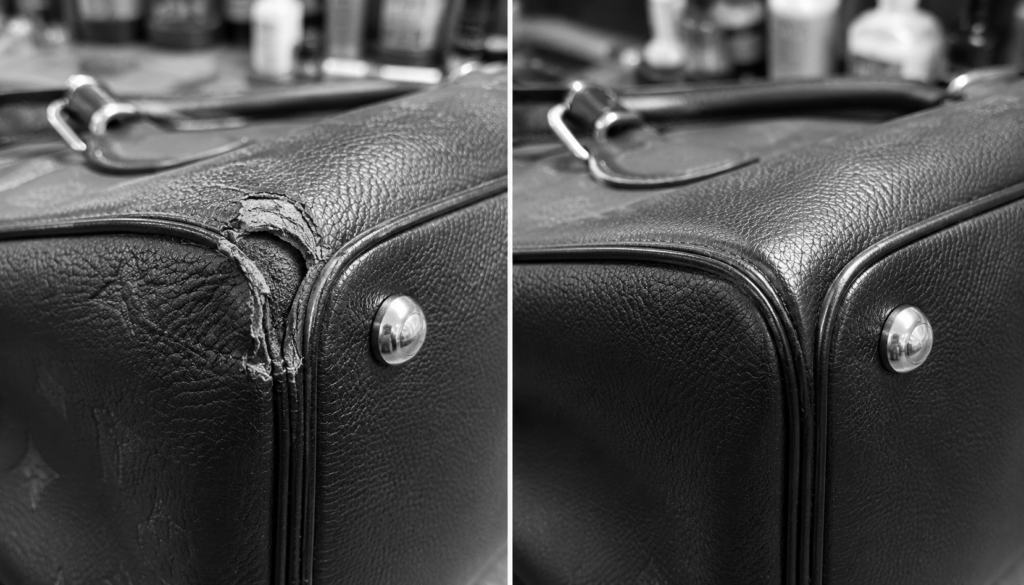
Quick Answer: A leather repair patch is matching leather, or a specialised backing material, that a technician bonds behind or over damaged leather to mend tears, holes, splits, or worn areas. Essentially, the professional colour-matches, blends, and refinishes the patch so the repair becomes nearly invisible, which restores both the strength and the appearance of the item.
You spot it the moment you pick up your bag: a split along the corner, a scuff that’s now a small hole, or a tear on the seat of your favourite leather sofa. Your stomach drops a little these things are expensive, and they’re often sentimental too.
Here’s the good news. A torn or punctured leather item is rarely “ruined.” In most cases, a properly executed leather repair patch can bring it back to life structurally sound and visually clean for a fraction of the cost of replacement.
Over the years, our craftsmen at The Leather Laundry have patched everything from a decade-old designer tote to a punctured car seat to a beloved leather recliner. Below, you’ll learn exactly what a leather repair patch is, when it’s the right fix, how the professional process actually works, what it costs, and how to avoid the DIY mistakes that turn a small tear into a permanent eyesore.
Search Intent: What People Really Want When They Search “Leather Repair Patch”
| Intent type | What they’re really asking | What we cover |
| Informational | What is a leather repair patch and does it work? | Definition, types, process |
| Commercial | DIY kit vs professional patch — which is worth it? | DIY vs pro, cost breakdown |
| Transactional | Where can I get my bag/sofa patched near me? | Service options across India |
| Local | Leather repair patch near me in Delhi / Mumbai | City-specific sections |
What Is a Leather Repair Patch?
A leather repair patch is a corrective method in which a technician bonds a piece of leather, leather-substitute fabric, or a sub-patch backing to a damaged area, restoring both strength and appearance. Depending on the damage, the patch can sit:
- Behind the tear — a sub-patch, so the original leather is pulled back together over a hidden support, or
- Over the damaged area — then refinished, recoloured, and textured to blend with the surrounding leather.
Importantly, a quality patch does more than “cover” damage; it makes the repair structurally durable and visually seamless. On full grain and top grain leather, for example, a skilled technician can colour-match dyes and replicate grain texture so closely that you’d struggle to find the repair afterward.
Common Materials Used in Leather Patching
- Matching genuine leather — best for visible, premium items (handbags, jackets, designer goods)
- Sub-patch backing fabric — a strong support placed under a tear before filling and refinishing
- Leather filler / flexible compound — rebuilds cracks, gouges, and small holes
- Colour-matched dyes and topcoats — blend the patch into the original finish
Common Causes of Leather Damage That Need a Patch
Leather fails for several everyday reasons. For example, watch out for these common culprits:
- Friction and abrasion — corners of bags, the toe area of shoes, sofa armrests
- Sharp impacts or punctures — keys, pet claws, accidental cuts
- Dryness and cracking — leather starved of conditioning eventually splits
- Stitching failure — seams open up, leaving the leather to tear along the line
- Heat and humidity — a real factor in Indian cities, where monsoon damp and dry winter heat both stress leather
- Overloading — stuffing a handbag past its design weight strains seams and corners
Signs You Need a Professional Leather Repair Patch
Of course, you can often handle a faint surface scuff yourself. However, you should book a professional when you notice any of these signs:
- A tear longer than a centimetre or one that’s spreading
- A hole or puncture that goes through the leather
- Damage on an expensive or designer item (Louis Vuitton, Gucci, Prada, Hermès, Christian Louboutin)
- Worn-through corners on bags or split soles/uppers on shoes
- A tear near a seam or stress point that will worsen with use
- Damage on a leather sofa seating area, where weight reopens weak repairs
Quick rule of thumb: If the damage affects the item’s structure, sits in a high-stress area, or is on something you’d be heartbroken to replace, leave it to a professional. A botched DIY patch is much harder (and pricier) to undo than the original tear.
DIY vs Professional Leather Repair Patch
So how does a home kit compare with professional work? Here is a side-by-side look:
| Factor | DIY Patch Kit | Professional Patch |
| Upfront cost | Low (₹300–₹1,500 kit) | Higher per repair |
| Colour matching | Approximate, often visible | Precise, custom-mixed dyes |
| Durability | Frequently peels or cracks | Long-lasting, properly bonded |
| Texture blending | Hard to replicate grain | Grain and sheen matched |
| Risk on designer items | High — can void resale value | Low — restores value |
| Best for | Hidden, low-stress, cheap items | Visible, premium, structural repairs |
In short, DIY can be fine for a hidden tear on an old, low-value item. However, for anything visible, valuable, or structural, professional patching protects both the look and the resale value.
How the Professional Leather Repair Patch Process Works
So what actually happens at the workshop? Below, you can follow the step-by-step process we use:
- First, our technician inspects the leather type (full grain, top grain, suede, or nubuck), the damage depth, and the finish.
- Next, we clean the area and lightly abrade it so adhesives and dyes bond properly.
- Then, for tears and holes, we slide a backing sub-patch behind the damage to rebuild support.
- After that, we realign and bond the leather, while flexible filler rebuilds any missing material.
- We then level the repaired surface so it matches the surrounding leather.
- Now comes the craft: we custom-mix dyes to the exact shade of your item.
- Next, we emboss or texture the patch to match the original grain.
- Finally, we apply a protective topcoat and condition the leather to restore its suppleness.
Before & After: A Representative Leather Repair Patch Case Study
The following is a typical example of the kind of restoration our workshop handles.
- Item — Tan full grain leather tote, around 4 years old
- Initial condition — A 2 cm tear at the base corner from repeated friction, plus a small puncture from a key
- Assessment — Structural patch required at the corner; colour-match needed for a faded tan finish
- Restoration process — Our team cleaned and prepped the corner, slid a sub-patch behind the tear, applied and sanded filler, matched a custom tan dye, re-embossed the grain, then sealed and conditioned the leather
- Products used — Sub-patch backing, flexible leather filler, custom-mixed dyes, protective topcoat, conditioner
- Time required — 3–5 working days
- Final result — We restored the corner to full strength and blended the repair so the tear no longer showed in normal light
- Customer outcome — The owner returned the bag to daily use instead of replacing it, which saved the cost of a new tote
Expert Insights & Industry Best Practices
Over years of hands-on work, a few principles consistently separate a great repair from a poor one. For instance, keep these in mind:
- Match before you mend. — Colour-matching is what separates an invisible repair from an obvious one. Rushing this step is the most common shortcut to avoid.
- Support before surface. — A patch that only treats the surface without proper backing will reopen. Structure first, finish second.
- Condition after repair. — Sanded and dyed leather needs reconditioning to stay flexible and prevent fresh cracking around the repair.
- Respect the leather type. — Suede and nubuck need entirely different handling from smooth full grain never treat them the same way.
Leather Repair Patch: Cost Breakdown
Naturally, pricing depends on the item, damage size, leather type, and finishing work. As a general guide, here is what to expect:
| Repair type | Complexity | What drives the cost |
| Small scuff / scratch refinish | Low | Cleaning, dye blend |
| Single tear or puncture patch | Medium | Sub-patch, filling, colour match |
| Corner reconstruction (bags) | Medium–High | Structural rebuild, texture match |
| Sofa seating-area patch | High | Large area, high-stress, blending |
| Designer item patch | High | Precision matching, value protection |
Tip: For an accurate quote, share clear photos with our team — pricing is always tied to the specific damage, not a flat rate.
Timeline Expectations
So how long will you wait? Typically, timelines look like this:
- Minor refinishing — 2–3 working days
- Single patch repair — 3–5 working days
- Structural or large-area patching — 5–7+ working days
- Designer items needing precise matching — may take longer to ensure quality
Remember, curing and conditioning time matters; rushing the finish is exactly how repairs fail early.
Common Mistakes to Avoid
- Using super glue on a tear — it dries hard, cracks the leather, and is very hard to reverse
- Applying mismatched paint or polish that flakes off
- Skipping the sub-patch and only treating the surface
- Patching without cleaning first, so nothing bonds properly
- Ignoring the damage until a small tear becomes an unrepairable split
- Treating suede or nubuck with products meant for smooth leather
Preventive Maintenance Tips (So You Need Fewer Patches)
Above all, prevention beats repair. Therefore, build these simple habits into your routine:
- Condition leather every few months to prevent dryness and cracking
- Store bags stuffed and upright, away from direct heat and damp
- Rotate shoes so they aren’t worn (and stressed) every single day
- Wipe spills immediately — don’t let moisture sit
- Keep sharp objects away from bags and pockets
- Address small scuffs early, before they open into tears
Leather Repair Patch Services Across India
Naturally, leather behaves differently depending on the local climate. As a result, professional restoration matters in each city for slightly different reasons.
Leather Repair Patch in Delhi
Delhi’s swing from dry, dusty heat to cold winters stresses leather and accelerates cracking. Demand here is high for handbag and jacket patching. If you’re searching “leather repair near me” or “handbag restoration near me” in Delhi, professional patching protects items from the city’s harsh seasonal extremes.
Leather Repair Patch in Mumbai
Mumbai’s coastal humidity and intense monsoon are tough on leather — promoting mould, softening, and seam failure. Sofa and bag patch repairs are common. A proper “leather restoration near me” service in Mumbai includes anti-moisture conditioning alongside the patch.
Leather Repair Patch in Bangalore
Bangalore’s milder, wetter climate is gentler on leather, but rain exposure still causes scuffs and seam wear. Searches for “leather shoe repair” and “shoe restoration near me” are strong here, especially among the city’s office and sneaker-loving crowd.
Leather Repair Patch in Hyderabad
Hyderabad’s dry heat dries leather out, leading to cracks that need filling and patching. Demand for “luxury bag repair near me” and “handbag restoration” is rising with the city’s growing premium market.
Leather Repair Patch in Chennai
Chennai’s heat and coastal humidity together make leather prone to both drying and mould. Leather sofa patching and bag restoration are popular. Locals searching “leather sofa repair” benefit from repairs paired with climate-appropriate protection.
Leather Repair Patch in Kolkata
Kolkata’s humid summers and monsoon make moisture management essential. Bag and sneaker repairs are in steady demand. A quality “shoe repair near me” or “heel repair near me” service here factors humidity into the finishing process.
Why Choose Professional Leather Restoration
So why pay for professional work instead of a quick fix? In short, you gain several clear advantages:
- Expert craftsmanship — trained technicians, not guesswork
- Precise colour and grain matching — repairs that disappear
- Value protection — keeps designer items resale-worthy
- Durability — patches that last, not peel
- Convenience — pickup and delivery options across major cities
Cost vs Replacement Analysis
A professional patch typically costs a small fraction of replacing a premium bag, pair of shoes, or sofa. Moreover, for designer items, restoration preserves resale value that a DIY job would destroy. In almost every case, therefore, repair is the smarter spend.
Ready to fix it properly? Send The Leather Laundry a few clear photos of the damage for a tailored quote — and skip the cost and heartbreak of replacing something you love.
Frequently Asked Questions
General Questions About Leather Patches
Does a leather repair patch actually become invisible?
On smooth full grain and top grain leather, a skilled technician can colour-match and texture the patch so it’s very difficult to spot in normal use. However, the result depends on the leather type and the damage location.
Can a leather repair patch fix a hole, not just a tear?
Yes. For holes, we place a sub-patch behind the damage, add flexible filler on the surface, then refinish the area so it blends.
Is a DIY leather patch kit a good idea?
For hidden tears on cheap, low-stress items, it can work. However, for visible, valuable, or structural damage, professional patching is far safer and longer-lasting.
How long does a professional patch last?
A properly bonded, conditioned patch can last for years, often the remaining lifespan of the item, as long as you maintain the leather.
Can you patch designer bags like Louis Vuitton or Gucci?
Yes. Designer items need precise matching to protect both appearance and resale value, which is exactly where professional restoration matters most.
Materials, Cleaning & Care
Will a patch weaken my leather sofa over time?
Not if we use proper backing support. Surface-only repairs on high-stress seating tend to fail, whereas a structural patch holds.
How do I clean a leather bag before deciding on a repair?
Wipe it gently with a slightly damp cloth and a leather-safe cleaner, then let it dry naturally. Avoid soaking it. For deep cleaning, professional leather dry cleaning is safer.
How do I remove pen ink from a leather bag?
A leather-specific ink remover can sometimes lift light ink, but it’s easy to spread or damage the finish. For valuable bags, professional treatment is the safer route.
Can suede and nubuck be patched?
Yes, though they need specialised handling and different products from smooth leather. Never treat them the same way.
Cost, Timeline & Service
How much does a leather repair patch cost?
It varies by item, damage size, and finishing work. Therefore, share photos for an accurate quote rather than relying on flat rates.
How long does the repair take?
Most single patches take three to five working days. Larger structural repairs and precise designer matching can take longer.
Can a worn shoe corner or sole be patched too?
Yes. Leather shoe repair includes sole and heel work alongside upper patching and refinishing.
Do you offer pickup and delivery?
Yes. The Leather Laundry offers convenient pickup and delivery across major Indian cities, so simply share your location to confirm.
Will patching void my item’s warranty?
For most everyday items, there’s no warranty concern. For in-warranty designer goods, however, check with the brand first.
Is repair really cheaper than replacing my item?
In almost all cases, yes, especially for premium and designer items where restoration also protects resale value.
Key Takeaways
- A leather repair patch bonds matching leather or backing material to mend tears, holes, and worn areas.
- The professional process is: assess, prep, sub-patch, fill, sand, colour-match, texture, seal.
- DIY suits hidden, low-value items; professional patching is best for visible, valuable, or structural damage.
- Colour matching and proper backing are what make a repair invisible and durable.
- Repair almost always costs far less than replacement and protects designer resale value.
- The Leather Laundry handles bags, shoes, jackets, and sofas across Delhi, Mumbai, Bangalore, Hyderabad, Chennai, and Kolkata.