
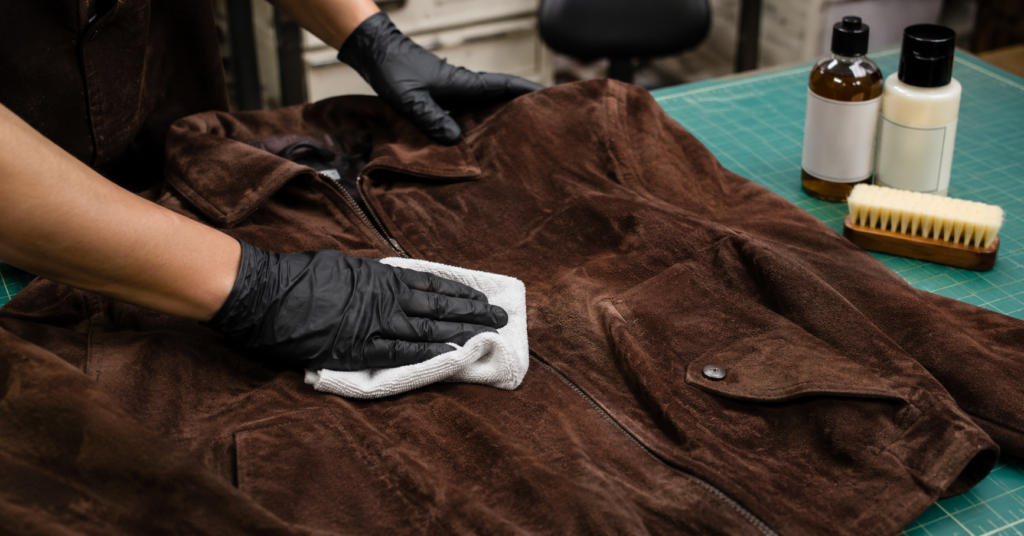
Your go to jacket is a bit dull, has a slight off smell and there’s a fairly persistent mark at the cuff. Before you go to the trouble of wiping it down with a damp cloth or some household cleaner (which in fact will strip the oils and colour from real leather), take a moment to think. Safe cleaning of a leather jacket is to use leather safe products, condition as appropriate for the finish and only polish with products that are compatible. This guide walks through each step at home, and explains when a leather-care specialist like The Leather Laundry is the safer choice.
Why Regular Leather Jacket Cleaning Matters
In India jackets are subject to dust and pollution pretty much all year round and then there’s the monsoon with its humidity. Grit gets into the grain, sweat and body oils accumulate at the collar and cuffs and damp cupboards can lead to mould. The leather will naturally go dull, dry out and crack at the elbows over time.
According to the Canadian Conservation Institute’s leather preservation guidelines, environmental conditions, moisture, light exposure and improper handling can contribute to leather deterioration over time.
Regular leather jacket care helps: a dry wipe after dusty rides, a gentle clean when the collar darkens, conditioning when the leather feels dry.
How to Clean a Leather Jacket at Home – Step-by-Step Guide
Short answer: Dust it with a dry cloth, patch test a leather safe cleaner, wipe it very gently with a cloth that’s only just damp, then allow it to dry naturally at room temperature.
- Identify your leather type – Check the care label first. The finish decides what is safe:
- Smooth, finished leather: coated and the most forgiving.
- Aniline and semi-aniline: soft, natural-looking and easily marked, so test everything first.
- Suede and nubuck: velvety surfaces. Never use ordinary leather cleaner or conditioner on them; they need specialist products or professional care.
- Patent or coated leather: glossy and usually just wiped clean.
- Synthetic leather is a different material altogether.
- Remove surface dust – Wipe the jacket with a clean soft dry microfibre cloth along the grain, being careful to get into the seams, the collar and the pockets. Any grit that’s been rubbed in during the cleaning will cause very fine scratches.
- Use a leather-safe cleaner – Choose a leather jacket cleaner and conditioner made for your finish, follow the instructions on the label and always test in a discreet area (e.g. inside the hem). Leather Naturally also recommend the use of leather specific products and stress the importance of testing first.
- According to leather care guidelines, leather care products should always be tested on a small, inconspicuous area before application. Using products specifically designed for leather also helps reduce the risk of damaging its surface.
- Clean gently – Apply the cleaner to a lightly damp cloth (not the jacket) and wipe in very even small strokes. No scrubbing, no soaking. Clean the whole panel not just one spot as this will avoid tide marks.
- Let it dry naturally – Hang it on a wide hanger in a well-ventilated room. No sunlight, heaters or hair dryers please. Leather Naturally gives the same advice for wet leather.
Never machine wash a real leather jacket. The agitation, the soaking and the heat will warp, stiffen and fade it (often permanently). More in our leather care tips.
How to Choose the Best Leather Conditioner for Jackets
A conditioner will replace some of the oils and moisture that the wear and tear has stripped away, keeping the leather soft and supple. There is no one single best leather conditioner for jackets, just the right one for your particular leather and finish.
| Your jacket | Look for | Avoid |
| Smooth, finished leather | A cream or lotion labelled for leather garments | Heavy waxes or oils made for boots, saddles or furniture |
| Aniline or semi-aniline | A light formula the label approves for aniline | Anything that doesn’t mention aniline |
| Suede or nubuck | Specialist suede or nubuck care only | Ordinary leather conditioner |
| Patent or coated | Products labelled for that finish | Assuming a standard conditioner works |
Apply sparingly. Too much conditioner on a jacket will leave the leather greasy and sticky and some products will actually darken the leather so it’s worth patch testing in a discreet area and allowing it to dry first. If the label doesn’t state what type of leather it is then ask the manufacturer. For an expensive or a vintage jacket, it’s worth asking a specialist.
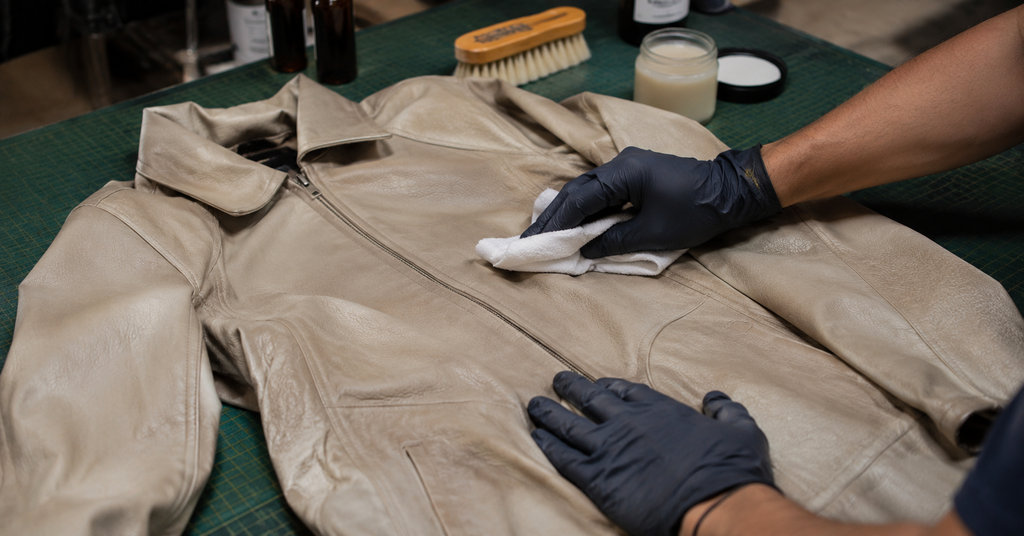
How to Apply Leather Conditioner to a Jacket Safely
Start with a clean, fully dry jacket; conditioning over dirt traps it.
- Check the product suits your leather and finish.
- Patch-test inside the hem or under the collar. Wait until it is fully dry, a few hours at least, and look for darkening.
- Use little. A coin-sized amount on a soft cloth, never poured onto the jacket.
- Rub in small circles one panel at a time, then smooth along the grain. Keep the layer thin.
- Let it absorb for the time on the label, often 10 to 30 minutes.
- Buff lightly with a clean, dry cloth if the label allows. Add a second thin coat only if the leather still feels dry.
Condition when the leather feels dry rather than by the calendar. Suede, nubuck, patent and all the various finishes need different treatment so you’ll want to skip this routine for them.
Leather Jacket Polish – How to Restore Shine Without Damage
Leather jacket polish adds a sheen and evens out the slight colour wear. It’s different to conditioning which is about nourishment and different again to recolouring which is about replacing the lost pigment or dye. To bring the shine back safely:
- Clean and dry the jacket first.
- Choose the right polish: one made for garment leather, in your jacket’s colour. Shoe polish, furniture polish and unsuitable waxes can build up or rub onto clothes.
- Patch-test a hidden spot and let it dry.
- Apply a pea-sized amount on a soft cloth, in thin strokes along each panel.
- Let it dry as the label says, then buff lightly with a clean, dry cloth.
Polish is a finish not a repair. Faded colour, peeling and deep scratches all require restoration and this may involve deep cleaning and the application of carefully matched pigment or dye depending on the state of the leather.
Leather Jacket Dry Cleaning – When Should You Choose Professional Cleaning?
Leather jacket dry cleaning is quite different to the dry cleaning of a normal garment. Standard solvents and tumbling will dry out the leather and can have an effect on the colour so you need to go with a cleaner who has experience in cleaning leather. Home care has limits, so here is when to go professional:
- Deep or stubborn stains (grease, ink, drinks): stain removal
- Mould, mildew or lingering odours: antifungal treatment, deep cleaning and deodorising
- Severe dryness, stiffness or cracking: conditioning, softening and crack repair
- Faded colour or peeling: colour restoration, recolouring and polishing
- Scratches, tears, broken zips or torn lining: scratch and tear repair, zipper and lining repair
- Delicate, expensive or vintage jackets: a physical inspection first, then a treatment matched to the leather
The Leather Laundry offers all of these, though not every stain or flaw can be removed completely. See the jacket repair and restoration service.
Common Leather Jacket Cleaning Mistakes You Should Avoid
| Don’t | Why it hurts | Do instead |
| Detergent or household cleaners | Strip oils and finish | Use leather-safe cleaner |
| Excess water | Stains, stiffens, warps | Use a barely damp cloth |
| Alcohol, bleach, harsh chemicals | Lift colour, dry leather | Skip them entirely |
| Hair dryer or heater | Leaves leather stiff | Dry at room temperature |
| Direct sunlight | Fades colour | Dry and store in shade |
| Cooking or random oils | Leave greasy, uneven marks | Use proper conditioner |
| Unsuitable shoe polish | Builds up, transfers | Use garment-leather polish |
| Conditioning without a test | May darken leather | Patch-test first |
| Airtight plastic covers | Trap moisture, invite mould | Use breathable covers |
Leather care guidance similarly warns against contact with perfume, sanitiser and other alcohol-based products, and against sunlight.
How to Choose Professional Leather Jacket Cleaning Near You
If you’re looking for a leather jacket cleaning near me then you want to go with a specialist who works on leather goods and will have a proper look at the jacket before giving you a price. That’s absolutely vital if you’ve got a particularly nasty stain, damaged colour, mould, cracks or any kind of structural issue. Here is how it works at The Leather Laundry:
- Send photos on WhatsApp for an initial quote.
- Book pickup. The Leather Laundry collects and delivers across India.
- The team inspects the jacket and confirms the treatment and final price.
- The jacket is treated and delivered back to you.
Price is dependent on the leather, the extent of the damage and the treatments required so it’s only possible to confirm once the item has been inspected.
Looking for expert leather jacket cleaning and restoration? Share your jacket photos and get a free quote.
How to Store and Maintain Your Leather Jacket
- Use a wide, padded hanger so shoulders keep their shape.
- Store it in a breathable garment cover, never airtight plastic.
- Keep it away from sunlight, heat and damp cupboards.
- Dust the surface regularly with a dry cloth.
- Inspect it each season for dryness, stains or mould.
How often to condition depends on leather type, usage, climate and the manufacturer’s instructions, so there is no universal schedule.
Final Thoughts – Give Your Leather Jacket the Care It Deserves
Gentle cleaning, compatible conditioning, careful polishing and correct storage keep a leather jacket soft, rich in colour and wearable for years. When stains, damage or fading go beyond home care, specialist help protects your investment. Get your leather jacket professionally cleaned: contact The Leather Laundry and let our team assess it.