
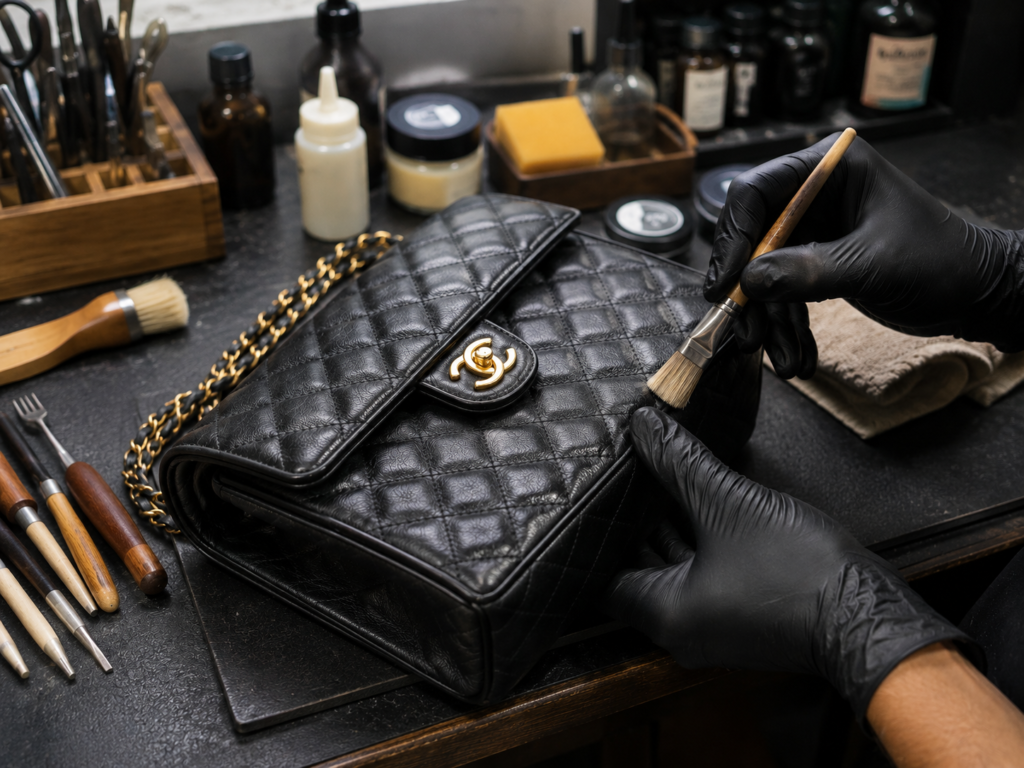
You pull your bag out of the cupboard after a few months, and something is off. Maybe the corners have gone flat and dull. Maybe there is a hairline crack running along the base, right where you always rest it on the floor. Or maybe, and this is the one that makes most people panic, there is an ink stain, a scuff, or a strap that has finally given up after years of being slung over the same shoulder.
The first question is almost never “how much will this cost.” It is “can this even be fixed, or is it done for good?”
Here is the honest answer. The vast majority of designer handbag damage is repairable, provided it is caught before it gets worse and handled by someone who actually understands leather, rather than someone treating it like fabric. What follows is a breakdown of the damages we see most often, which ones bounce back completely, which ones need a realistic conversation, and how the actual repair process works, so you are not guessing the next time your bag looks like it has had enough.
Why Designer Bags Get Damaged Faster Than People Expect
Leather is a living material, not plastic. It reacts to heat, humidity, sweat, oil from your hands, and even the dye in your jeans rubbing against it during a commute. A bag that costs a lot of money is not immune to wear. If anything, the finer the leather, the more sensitive it tends to be to neglect.
Most damage falls into a handful of repeat offenders:
- Surface cracking on corners, handles, and the base, usually from dryness or repeated friction
- Colour fading or patchiness, especially on bags carried daily in direct sunlight
- Peeling or “sweating” PU coating on bonded leather bags left in humid storage
- Hardware discolouration, where zips, buckles, and studs lose their plating
- Handle and strap wear, from the leather cracking to the stitching pulling loose
- Stains from ink, oil, makeup, or coloured fabric transfer
- Torn or stained lining inside the bag, often ignored because it is not visible
- Water damage, which can stiffen leather or leave permanent tide marks if left untreated
Each of these has a different fix, and knowing which is which saves you from either giving up on a bag too early or expecting a miracle where there is not one.
The Damages That Are Almost Always Fixable
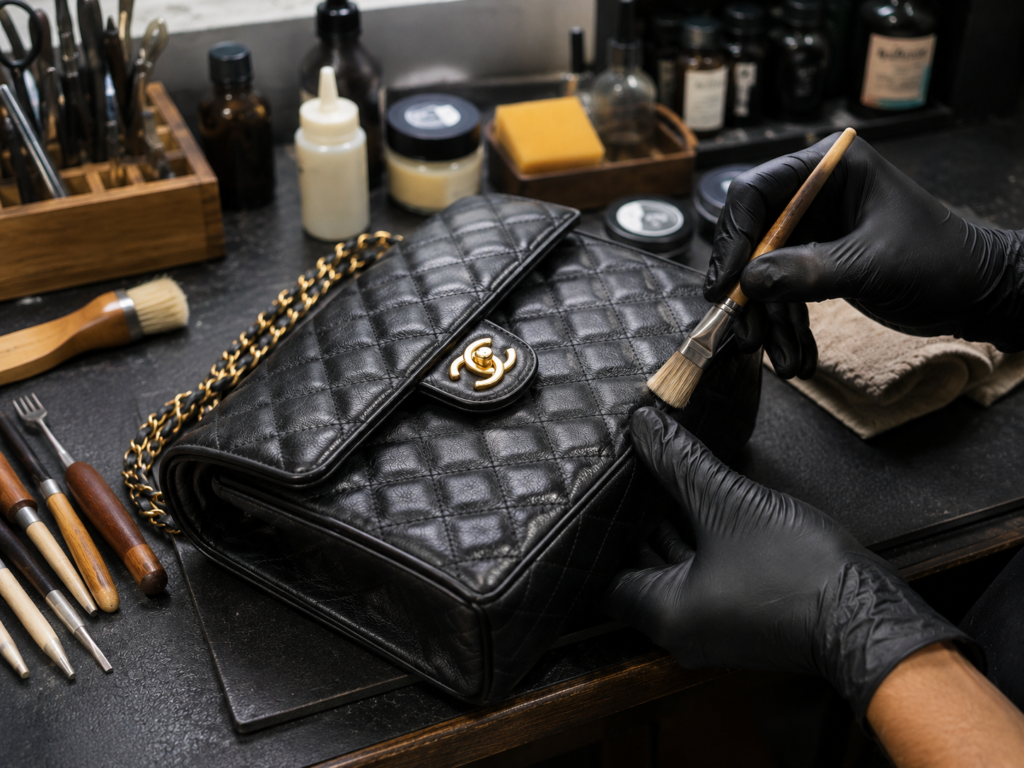
Cracked or dry leather. This is the most common call we get, and also the easiest to reverse if it has not gone too deep. A proper conditioning and recolouring process rehydrates the fibres and rebuilds the surface finish. Left untreated for years, though, deep cracks can reach the base leather, and at that point it becomes a patch-and-blend job rather than a simple polish.
Faded or uneven colour. Full-bag recolouring is one of the more satisfying restorations to watch, because a bag that looked ten years old can come back looking close to new. This is exactly the kind of work involved in gucci handbag restoration, where the goal is not just cleaning but rebuilding the original pigment and finish layer by layer, so it does not crack or flake again in a few months.
Hardware issues. Tarnished zips, scratched buckles, and dull studs can usually be re-plated or polished back to their original tone. This is often skipped by people who assume a scratched zipper means a dead bag. It rarely does.
Stains, including ink. Ink is one of the more stressful stains because scrubbing it usually makes it worse, spreading the pigment deeper into the grain. The right approach depends on whether the leather is aniline, pigmented, suede, or coated, and using the wrong solvent can strip the finish entirely. If you are wondering how to remove pen ink from a leather bag, it is worth reading through what actually works before attempting a fix yourself.
Straps and handles. Cracked handles can often be recoloured and conditioned back to shape. If the leather has genuinely split, or the stitching has torn through, replacement or reinforcement is the more durable route, especially on bags that get daily use.
When It’s a Harder Conversation
Not everything bounces back to “as new,” and a repair studio that tells you otherwise every single time is not being straight with you. A few cases worth knowing:
- Deep structural tears in low-quality bonded leather may not hold a patch well over the long term
- Severe water damage that has already caused the leather to stiffen and crack can be improved but is rarely restored to its original softness
- Mould that has set in for months can leave permanent staining even after treatment
- Extremely worn corners on soft-structure bags may need a discreet patch rather than an invisible fix
The point of an honest assessment is not to talk you out of repair. It is to set expectations correctly, so you are not disappointed later.
What Actually Happens During a Professional Repair
A proper restoration is not a wipe-and-polish job. It typically follows a sequence:
- Inspection: identifying the leather type, the extent of damage, and whether it is cosmetic or structural
- Deep cleaning: removing years of surface oil, dust, and grime before any repair work starts, since colour and conditioning will not hold on a dirty surface
- Repair of the base issue: patching, re-stitching, or hardware replacement, depending on what is actually wrong
- Recolouring or conditioning: rebuilding the pigment layer and restoring flexibility
- Finishing and protection: sealing the work so it holds up under normal daily use
Bags built with genuine, well-tanned leather, the kind used in most established houses, tend to respond very well to this process, because the base material is strong even when the finish has worn off. This is why a full-service handbag cleaning service often produces before-and-after results that look close to unbelievable. The leather underneath was never the problem; the surface finish was.
Louis Vuitton, Coated Canvas, and Why It’s Handled Differently
If you own an LV piece, you have probably noticed it does not behave like a bag made entirely of leather. Most Louis Vuitton pieces use coated canvas with leather trims, so the handles, piping, and corners are usually where the real wear shows up first, while the canvas body stays relatively stable. That means LV bag repair work usually focuses on the vachetta leather trim, which naturally darkens and can crack if not conditioned, rather than on the printed canvas itself.
This distinction matters because using the wrong products, such as an all-purpose leather cream meant for shoes or jackets, can actually darken vachetta unevenly or damage the canvas coating. Anyone offering Louis Vuitton repairs should know this difference before they touch the bag.
A Few Things You Can Do Between Repairs
- Rotate the bags you use daily so no single piece takes constant stress on the same crease points
- Store bags upright with their dust bag stuffing intact, not flattened in a drawer
- Keep leather away from direct AC vents and prolonged sunlight
- Wipe down handles after use; hand oils are one of the biggest silent causes of handle darkening and cracking
- Avoid DIY ink or stain removal with alcohol-based wipes, since this often sets the stain permanently
None of this replaces proper conditioning, but it does buy time between professional restorations.
The Bottom Line
Most designer handbag damage, whether it is cracked leather, faded colour, tarnished hardware, stained interiors, or worn handles, has a real fix, not just a temporary patch-up. The exceptions are rare, and even then, a good restoration studio will tell you honestly rather than promise the impossible. If your bag has been sitting in the cupboard because you assumed it was beyond saving, it is very likely worth a second look before you write it off. A quick, photo-based assessment from people who work with leather daily usually settles the question faster than months of guessing.
Frequently Asked Questions
1. Can a cracked designer handbag actually be restored to look new?
In most cases, yes. Surface cracking from dryness or friction responds well to conditioning and recolouring. Deep, long-neglected cracks may need patch work first, but the bag can still be brought back to a very presentable finish.
2. Is it safe to try removing ink stains from a leather bag at home?
It is risky. Home remedies such as alcohol wipes or nail polish remover often spread the ink deeper or strip the leather’s finish. It is safer to get it assessed first, since the right method depends entirely on the leather type.
3. Does Louis Vuitton canvas need the same care as full leather bags?
No. LV pieces are mostly coated canvas with leather trim, so the trim, made of vachetta leather, needs conditioning, while the canvas body needs a completely different, gentler cleaning approach.
4. How do I know if my bag’s hardware can be fixed or needs replacing?
Tarnishing and scratches can usually be polished or re-plated. Only hardware that is physically broken, bent out of shape, or missing parts typically needs replacement.
5. Will a repaired bag’s colour match the original exactly?
A skilled recolouring process matches the original shade very closely, including gradient tones on bags that have faded unevenly. It is rarely a flat, single-tone repaint.
6. How often should a designer handbag get a professional clean, not just a repair?
For bags used regularly, a professional clean and condition every six to eight months keeps small issues from becoming bigger repairs later. Bags used occasionally can go longer, but should still be checked before long-term storage.
7. Is water damage always permanent?
Not always. If treated soon after exposure, most water marks and stiffness can be significantly improved. Leather left to dry on its own for weeks is harder to fully reverse.
Related reading: How to Remove Oil, Ink, or Dye Stains From Leather and How to Clean a Leather Bag at Home vs Professional Cleaning.